
Life in Britain changed profoundly in 1939 with the outbreak of WWII. For millions, the familiar rhythm of everyday life was replaced by ration books, blackouts and air-raid sirens.
Around five million Brits served in the Armed Forces, facing the horrors of conflict, while the war brought hardship for those on the home front too. For some families, an air raid could mean returning home to find their property had disappeared.
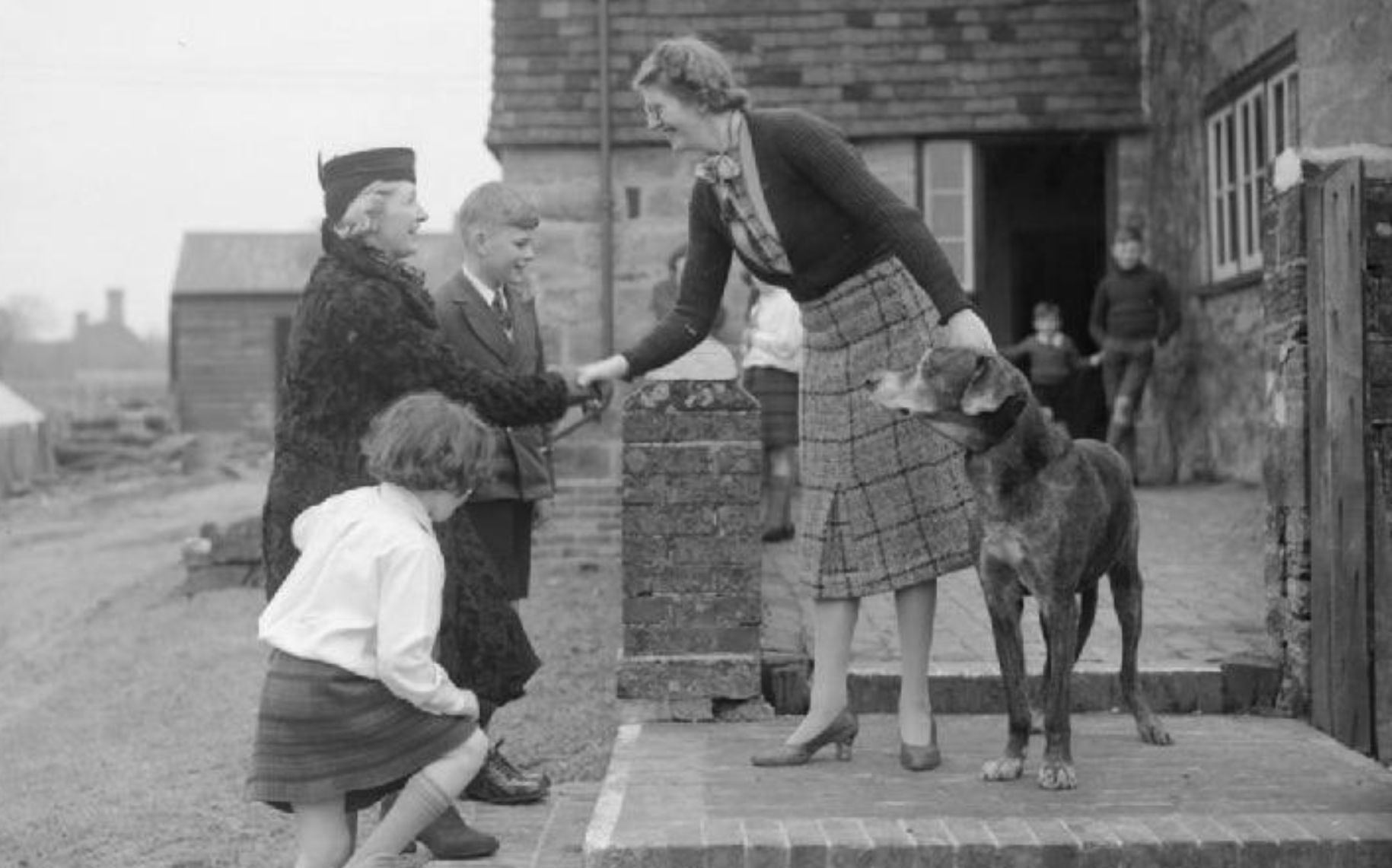
© Public Domain
Wartime housing became an increasingly urgent concern, as people often had to live under one roof with other households through necessity. To fully understand the history of landlords during WWII, it helps to look back further in time.
Shared housing in Victorian times
During the 19th century, taking in a lodger was an important source of extra income for many working class households. Wages could be painfully low, particularly when supporting a large family. Illness, injury or unemployment could suddenly remove a breadwinner’s earnings, making the rent paid by a lodger an important contribution to the household budget.
Britain’s rapidly growing industrial towns and cities also contained tenements, lodging houses and larger properties occupied by several households. Conditions varied considerably, but overcrowding and poor sanitation were serious problems in many areas.
By the 1930s, developers had built millions of new homes, including the familiar suburban semi-detached houses that still characterise Britain’s towns today, yet housing inequalities remained. Many families continued to live in ageing urban properties, where letting a spare room was both a source of income and a means of providing affordable accommodation.
An important part of HMO history, shared housing didn’t suddenly appear when modern legislation was drafted. Its roots stretch much further back into Britain’s social and economic history.
Britain’s housing under pressure
When WWII came in September 1939, housebuilding slowed dramatically as workers, materials and industrial capacity were directed towards the war effort. At the same time, the movement of people created intense pressure in particular parts of the country.
Children and families were evacuated from vulnerable cities. Members of the Armed Forces moved around Britain. Workers travelled to areas where factories, shipyards, aircraft production and other essential industries needed labour. In towns receiving large numbers of people, every available room could matter.
More than 200,000 homes in Britain were destroyed by enemy air raids during the war, while many more suffered damage. Behind that statistic were families suddenly deprived not simply of property, but of photographs, furniture, clothes and possessions accumulated over generations.
Homeowners and landlords provided rooms to lodgers and boarders, with some larger properties accommodating several households. A dining room, box room or upstairs bedroom might become somebody else’s temporary home. These arrangements belonged to a period of national emergency. For many people, finding somewhere to sleep was about maintaining a small measure of security amid circumstances over which they had no control.
What was it like being a wartime landlord?
The role meant navigating strict government price controls, severe shortages of repair materials and heavy regulations. A property owner faced the same rationing, shortages, blackout regulations and risks as everybody else. Repairs could be difficult when labour and building materials were scarce. Everyday household goods were precious, so replacing something damaged or destroyed was rarely straightforward.
The distinction between landlord and householder was also blurred. Someone taking in a lodger might simply be letting one bedroom within their own family home, rather than operating a separate rental property.
Rent regulations added another dimension. Controls had developed from legislation introduced during the First World War and subsequently extended, but furnished accommodation occupied a different position within the system. This mattered because a furnished rental could command payments not simply for the room itself, but for the furniture and, in some cases, services supplied with it.
As housing shortages intensified, concerns grew about the affordability of higher charges for furnished rooms. Parliament eventually responded with the Furnished Houses (Rent Control) Act 1946, which received Royal Assent on 26th March. It introduced price controls regarding homes or parts of homes where rent included payment for furniture or services and allowed disputes over reasonable rents to be considered by tribunals.
Although technically post-war legislation, it was very much a product of housing pressures inherited from wartime Britain. It made life harder for landlords, who had suffered the same financial pressures as everyone else from 1939 to 1945.
The government’s Housing (Temporary Accommodation) Act 1944, initiated by Prime Minister Winston Churchill, authorised the building of prefabricated (prefab) homes. These factory-built houses were manufactured and assembled rapidly to solve massive post-war housing shortages. They were meant as a ten to 15-year stopgap solution until traditional bricks and mortar housing could recover.
Furnishing a home in an age of shortages
Today, furnishing a rental can involve ordering beds, wardrobes, sofas and tables as part of a package and having them all delivered together within days. During the war, even acquiring basic furniture could be a challenge.
Timber and manufacturing capacity were needed for the war effort. At the same time, homes lost to bombing had created an urgent need for replacement furniture. The government’s answer was the Utility Furniture Scheme. Implemented in 1943, the scheme restricted production to approved designs intended to make economical use of scarce materials while providing functional, reasonably priced furniture. Many pieces carried the distinctive CC41 Utility mark.
Furniture was distributed according to need, with priority given to people who had lost their homes through bombing. Today, a plain wardrobe or wooden chair bearing the CC41 stamp, perhaps discovered in an antique furniture auction, is more than a vintage object. It recalls a period when furnishing a home was shaped by wartime production and the need to distribute limited resources fairly. For landlords providing furnished rooms during WWII, these restrictions were part of the same daily reality experienced by their tenants.
From lodging houses to modern HMOs
Britain emerged from the war facing an enormous rebuilding challenge. Furnished and unfurnished rooms remained an important part of private rented accommodation during the 1950s and 1960s. Gradually, however, expectations surrounding housing standards changed. Shared accommodation became subject to increasingly formal regulations, bringing us towards the modern understanding of a house in multiple occupation.
Today, an HMO is broadly a property occupied by people forming more than one household who share facilities such as a kitchen, bathroom or toilet, although the precise legal definition and licensing requirements are more detailed.
The Housing Act 2004 established the modern HMO licensing framework. The law addresses matters that wartime tenants couldn’t take for granted, including management responsibilities, property standards, safety and the number of people who can occupy licensed accommodation.
The contrast is an important chapter in HMO history. A spare room offered to a displaced worker in 1941 and a regulated HMO today may both involve unrelated people sharing a building, but the legal, social and practical circumstances are very different.
Remembering the wartime generation
Wartime housing history can easily become a story of legislation, building programmes and statistics. However, the story of Britain in WWII ultimately belongs to the people who left home to serve and, tragically, never returned. It also belongs to the householders who opened their doors, rented rooms, shared kitchens and somehow created a sense of home in temporary and difficult circumstances.
As Remembrance Day approaches, commemorating these extraordinary sacrifices ensures that this part of history will never be forgotten.